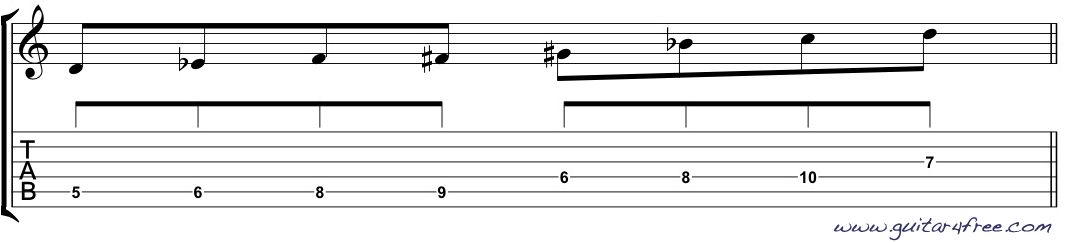
Altered Scales can be complicated if you learn them just as they are because at first glance they do not conform to an obvious pattern when laid out on the fret board. I recommend that you learn the altered scale by remembering that it is the 7th mode of the Melodic Minor scale. It is other wise known as the Super Locrian Mode. In this study we are going to look at how to apply the Altered Scale to a solo.
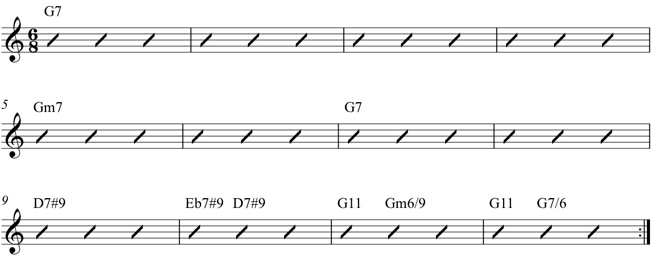
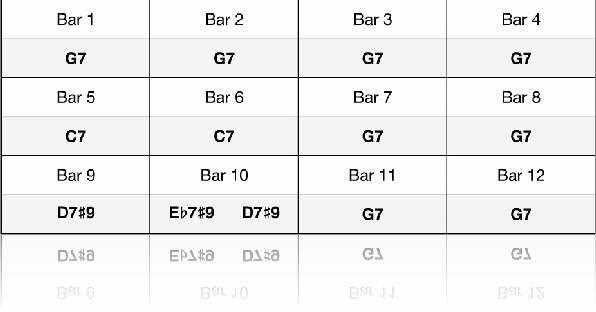
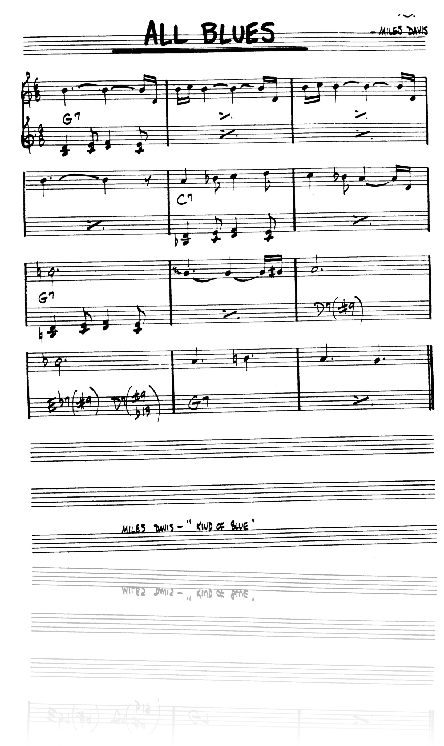
In a blues progression we typically play the chords, I, IV, V. Take All Blues by Miles Davis as an example of a Jazz Blues Progression, where we play I, IV, V, #V, V, I.
Using Altered Chords from an Altered Scale - All Blues
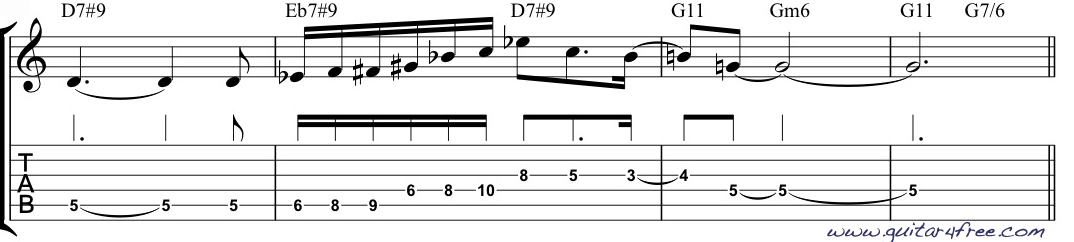
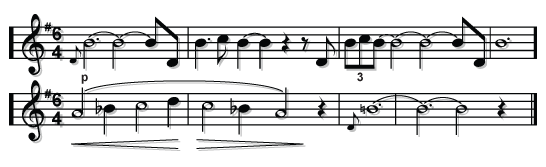
Throughout the first 8 bars we can improvise using some fairly standard Jazz Blues Phrasing but when you move to the V in bar 9 and then the #V in bar 10 things become a little more complicated and it is necessary to do some extra work to avoid running into a dead end whilst soloing. It is at this point that i suggest trying an Altered chord as they can be played over any 7 chord including extended chords such as the #9s that we have here. Have a look at the scale and lick below to examine how this works in practice:
In the D Altered Scale lick below, I have simply played the D over the V7#9 and then as we move to the #V run up the Altered scale before finishing the run on the D as we move back to the V. This creates a good amount of tension which is resolved by finally dropping into a Minor to Major Blues Lick by way of a C when we return to the I for the Turnaround.
Remember: Altered Scales can be used over any 7th and altered chord and as you can see over the V chord in Jazz Blues they add a good amount of tension and release to your phrases. Give them a try and see how they sound!
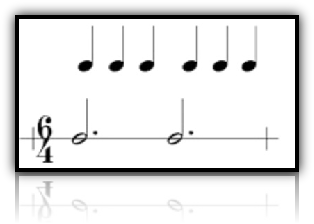
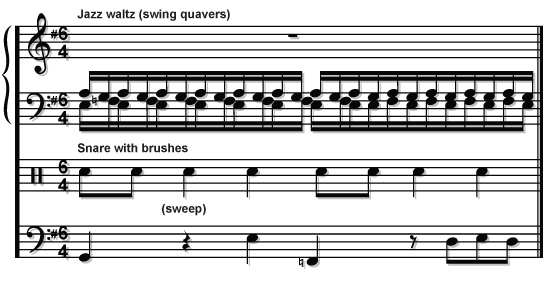
The score is notated in 6/4. The tempo is described as jazz waltz as each 6/4 bar sounds like a pair of bars in 3/4 time (a time associated with the waltz).
Swung rhythm: dividing beats into unequal 'halves where the first note is slightly longer than the next, creating the swing feel.
Syncopation: essential to making music sound jazzy. Syncopated notes are accented on the weak beats or off-beat.
More devices: triplets, rhythmic displacement, cross rhythms.
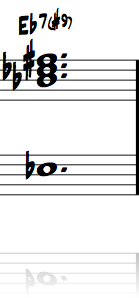
The 12- bar blues chord sequence is varied as some of the chords are extended such as adding 7ths, 9ths, 11ths, and 13ths normal in jazz, blues notes and altered notes e.g sharpened 9ths in bars 9 & 10.
This head structure for 'All Blues' is very similar to the 12-bar blues pattern except Miles Davis doubles the rate of harmonic change, having two chords per bar not just one. A chord sequence in jazz = 'changes'.
Moorish Overtone in All Blues:
The music progresses through five modes (a system with origins in Arabic music): karr, fagu (both black), lakhal, labyad (both white, and corresponding to a period of one's life or an emotion) and lebtyat (white, a spiritual mode relating to the afterlife). There are further submodes, making for a complicated system, one to which nearly all male musicians conform.
In All Blues, each soloist starts with a series of five scales, to be played on until the cycle is completed, thus a Moorish overtone enters the proceedings at the same stage, in everybody's solo.
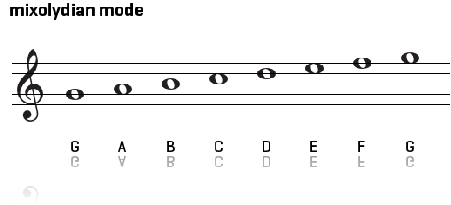
All Blues is in the Mixolydian mode (the white notes on the piano from G to G) due to the frequent use of the blue flattened 7th (F natural) making it sound more modal than in the key of GM.
Altered Chords:
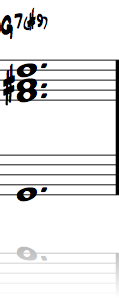
G7#9
G,B,D,F,A#
[A# is the altered note]
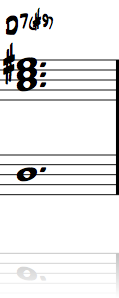
D7#9
D,F#,A,C,E#
[E# is the altered note]
Mixolydian mode: G A B C D E F G
[F is the flattened 7th note in the key of G]
Instrumental Techniques
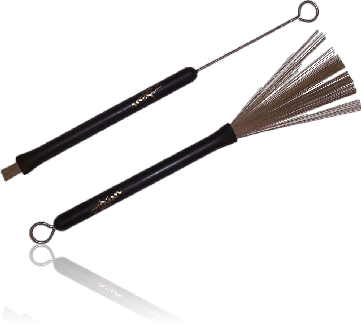
1. Snare drum is played with wire brushes at the start - switches to sticks later on.
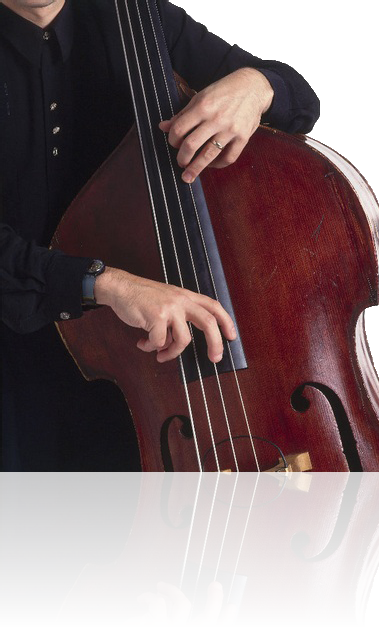
2. Bass plays pizzicato (plucked) throughout.
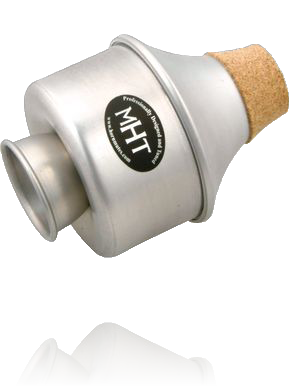
3. Trumpet is played with a Harmon Mute for the Head.
4. Piano plays tremolo at the start then begins comping
(accompanying with chords and short melodic ideas)
Instruments
The FRONTLINE consists of the instruments that play the main melody and have prominent solos:
The FRONTLINE:
Trumpet (Miles Davis)
Alto Saxophone (Cannonball Adderley)
Tenor Saxophone (John Coltrane)
The RHYTHM SECTION provides harmonic and rhythmic backing (although the pianist has a short solo):
The RHYTHM SECTION:
Piano (Bill Evans)
Bass (Paul Chambers)
Drums (Jimmy Cobb)
Main melody is called the head: and is played by muted trumpet. Lasts for 12 bars and can be heard near the start and beginning of the piece.
There is a simple 4 bar riff in parallel 3rds that separates eachsection.
'All Blues' based on the 12 Bar Blues progression - consisting of variations of the head over 12 bars and returns throughout the piece.
One statement of the chord sequence is called a chorus section.
There is an introduction, coda at the end and 4 bar riff for solo sections.
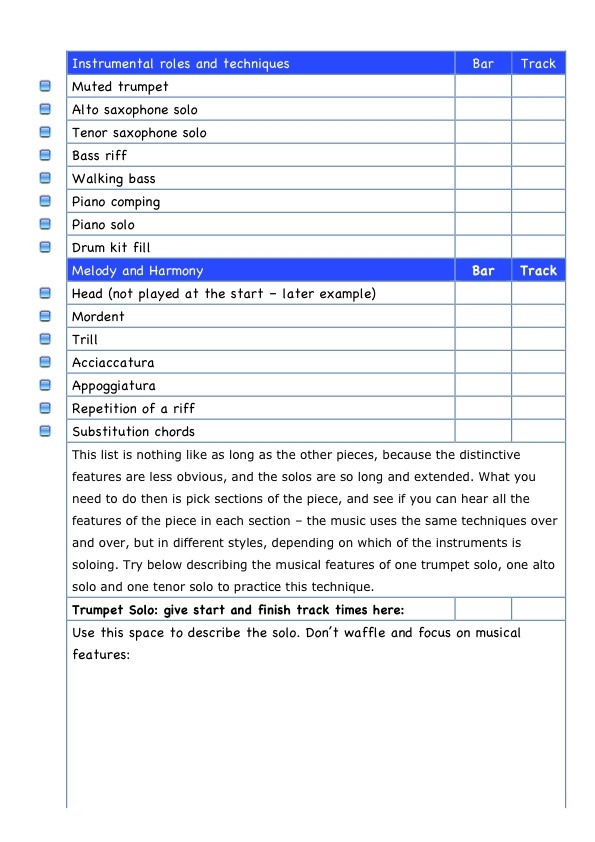
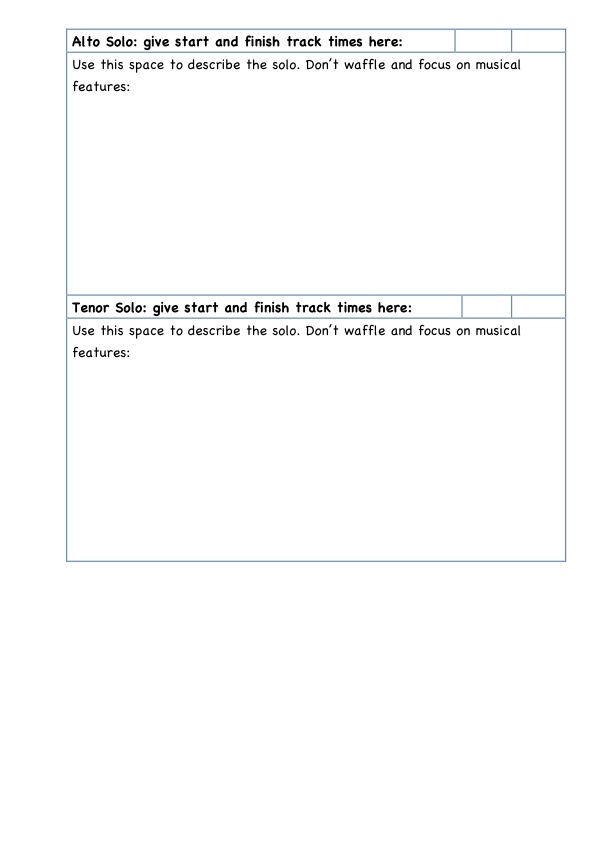
Complete the Following Listening Activities: