"; } if (!empty($error)) { $errorcode = file_get_contents($error_url); $replace = "##error##"; $errorcode = str_replace($replace, $error, $errorcode); echo $errorcode; exit; } $internalfields = array ("submit", "reset", "send", "captcha_code"); $message .= $eol; $message .= "IP Address : "; $message .= $_SERVER['REMOTE_ADDR']; $message .= $eol; foreach ($_POST as $key => $value) { if (!in_array(strtolower($key), $internalfields)) { if (!is_array($value)) { $message .= ucwords(str_replace("_", " ", $key)) . " : " . $value . $eol; } else { $message .= ucwords(str_replace("_", " ", $key)) . " : " . implode(",", $value) . $eol; } } } $body = 'This is a multi-part message in MIME format.'.$eol.$eol; $body .= '--'.$boundary.$eol; $body .= 'Content-Type: text/plain; charset=ISO-8859-1'.$eol; $body .= 'Content-Transfer-Encoding: 8bit'.$eol; $body .= $eol.stripslashes($message).$eol; if (!empty($_FILES)) { foreach ($_FILES as $key => $value) { if ($_FILES[$key]['error'] == 0 && $_FILES[$key]['size'] <= $max_filesize) { $body .= '--'.$boundary.$eol; $body .= 'Content-Type: '.$_FILES[$key]['type'].'; name='.$_FILES[$key]['name'].$eol; $body .= 'Content-Transfer-Encoding: base64'.$eol; $body .= 'Content-Disposition: attachment; filename='.$_FILES[$key]['name'].$eol; $body .= $eol.chunk_split(base64_encode(file_get_contents($_FILES[$key]['tmp_name']))).$eol; } } } $body .= '--'.$boundary.'--'.$eol; mail($mailto, $subject, $body, $header); header('Location: '.$success_url); exit; } ?> Untitled Page
Reference:

- Miles Dewey Davis III. (2014). The Biography.com website. Retrieved Apr 10, 2014, from http://www.biography.com/people/miles-davis-9267992.


“The way you change and help music is by tryin’ to invent new ways to play.”
— Miles Davis
.


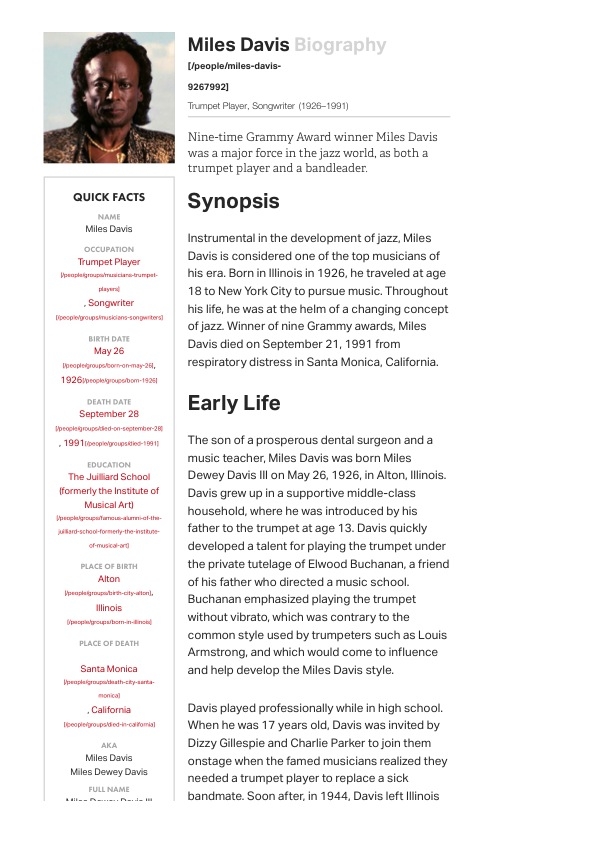
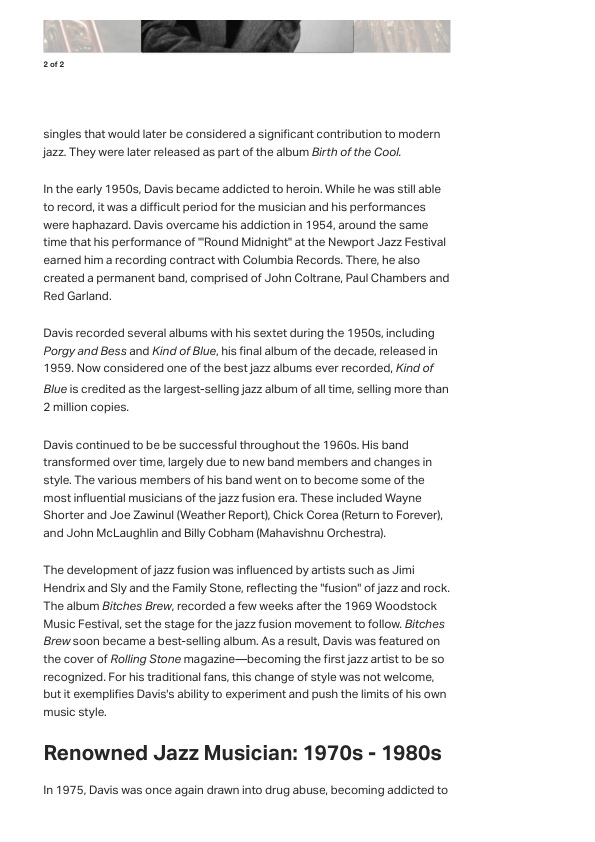
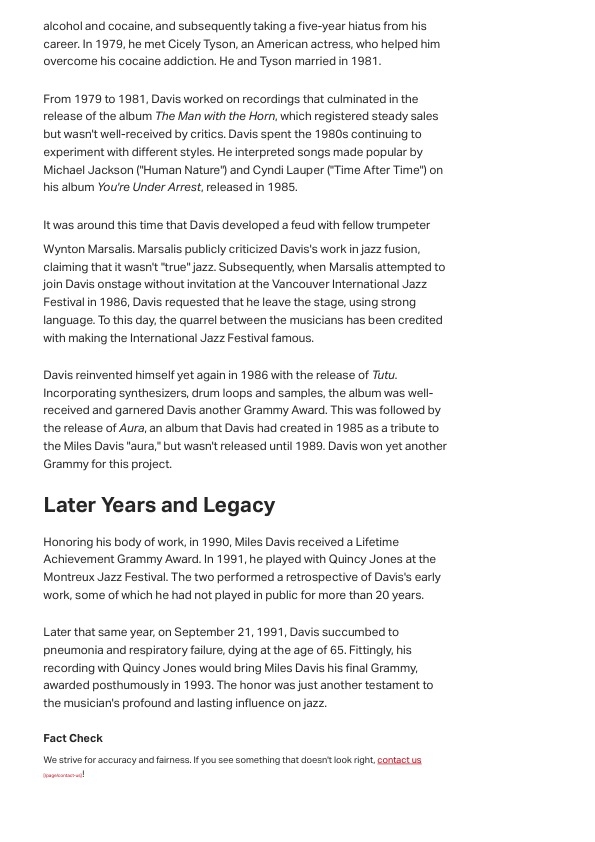
Miles Dewey Davis III

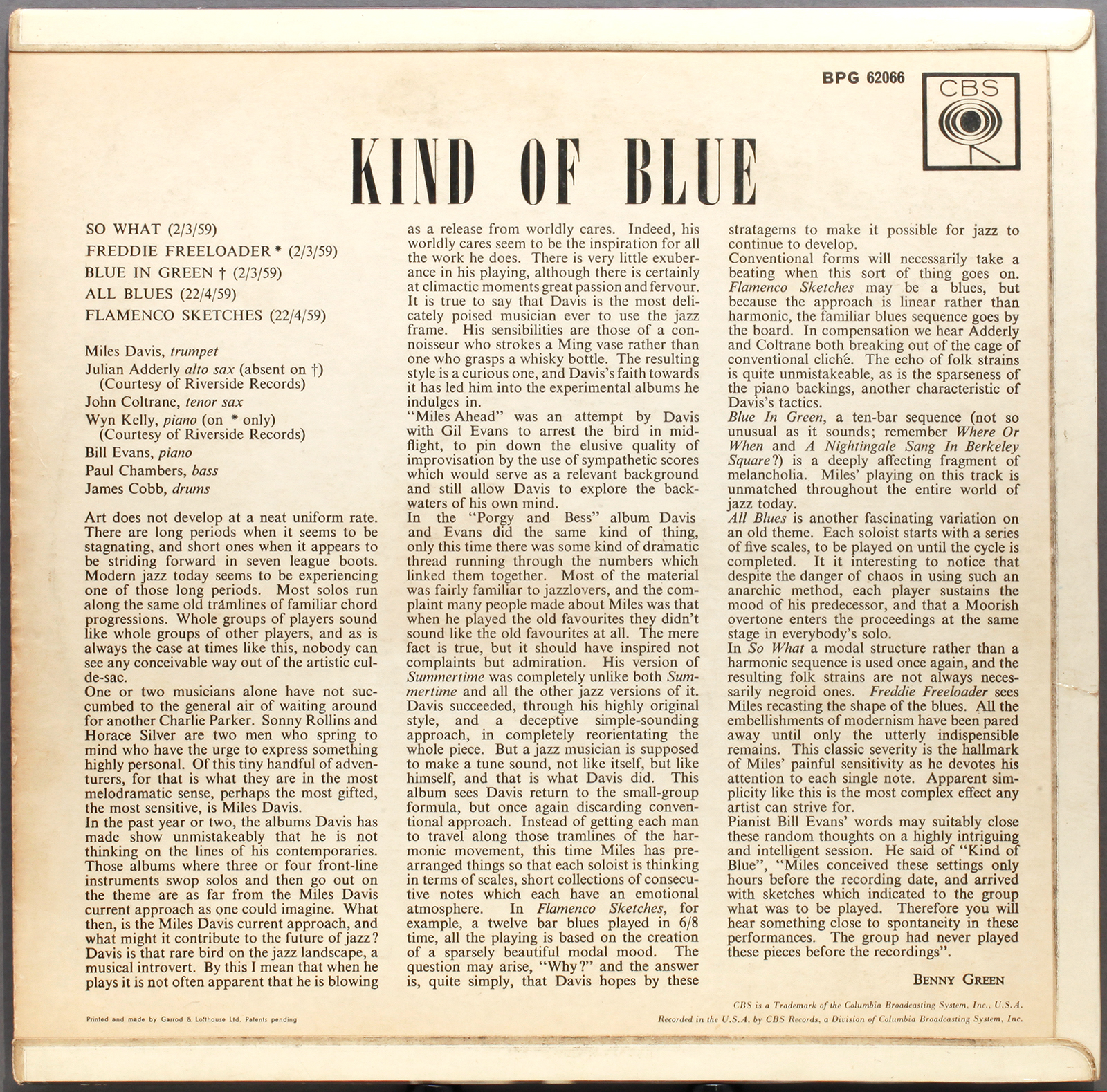
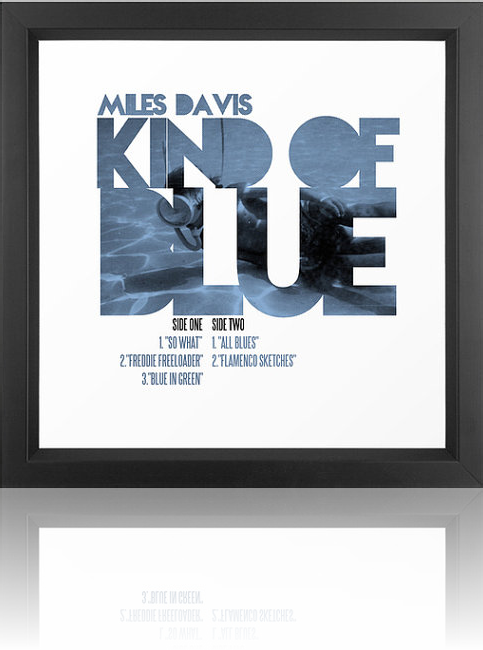
Song/Album/Year: “All Blues”  was written by Miles Davis for his 1959 best-selling record, “Kind Of Blue” in New York.


Double click to edit
Musician line up for album 'Kind of Blue'

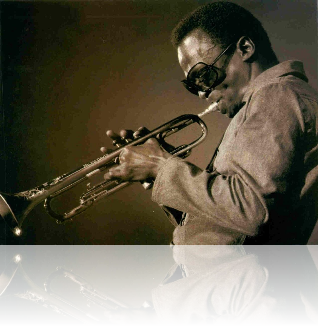
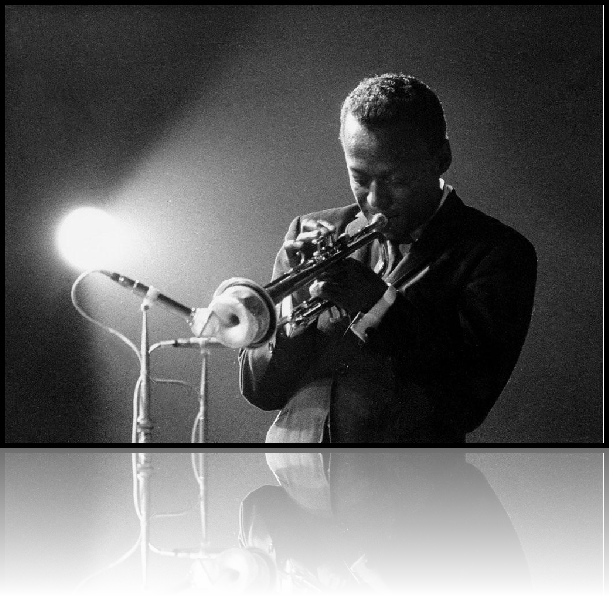
Miles Davis: Trumpet
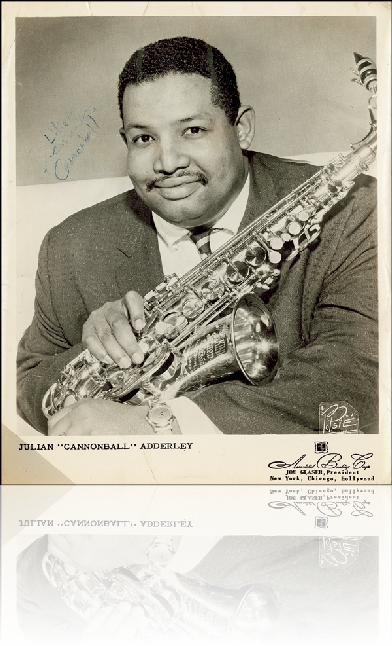
tJulian 'Cannonball' Adderly: Alto Saxophone
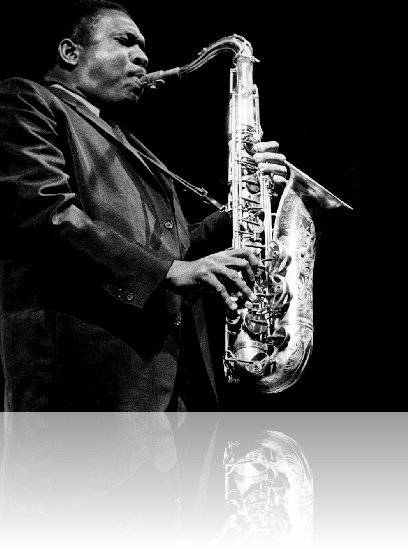
John Coltrane: Tenor Saxophone
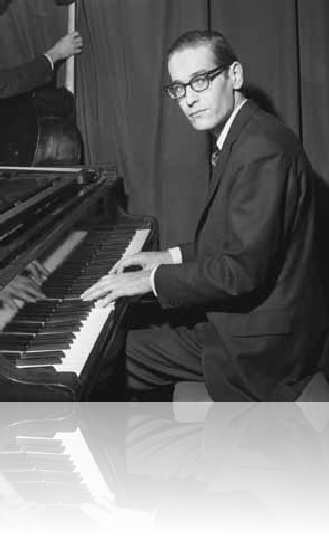
Bill Evans: Piano
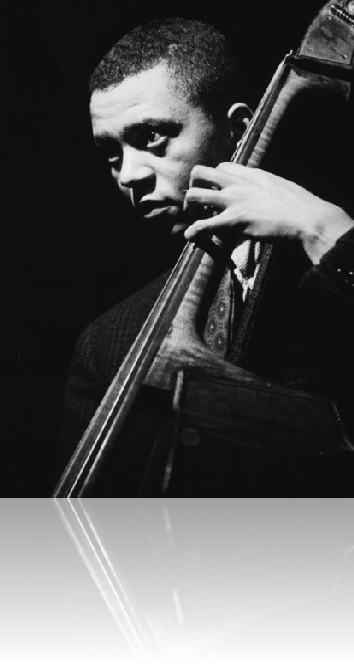
Paul Chambers:
Double Bass

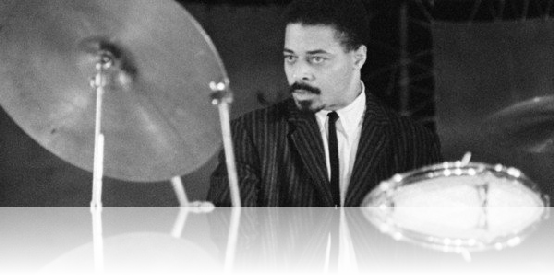
Jimmy Cobbs: Drums
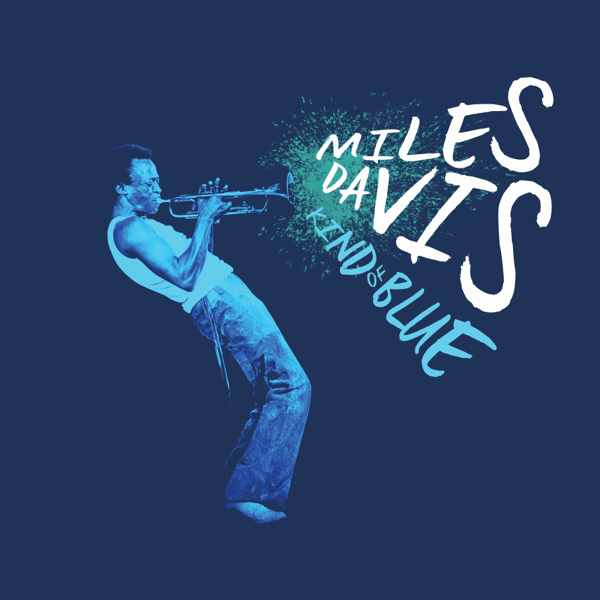
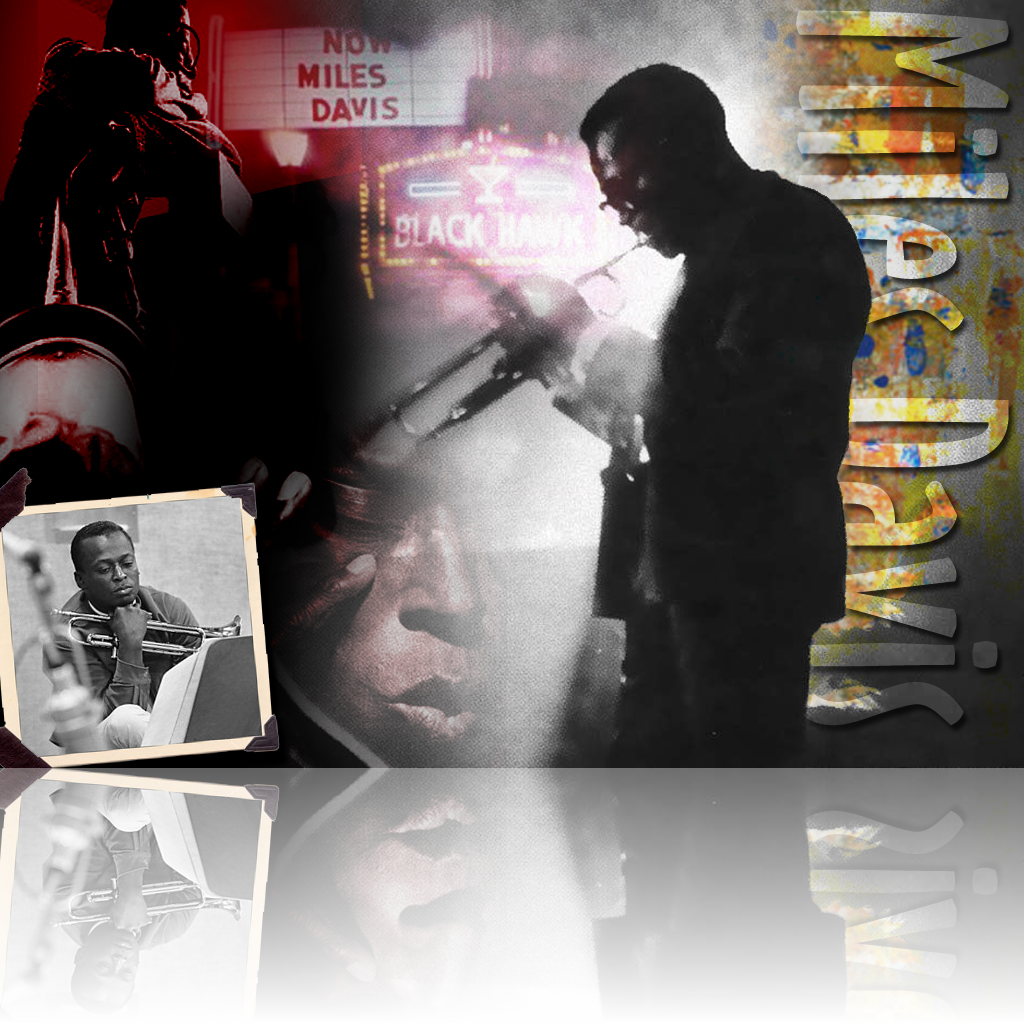
Miles Davis

Contributing to the wide spectrum of jazz music, Miles plays the trumpet, flugelhorn, piano, organ and synthesizer.
Coming from a well-off middle-classed family, he went to Juilliard to study jazz. At only 17 years of age, with permission from his father, he later dropped out to join Charlie Parker and Dizzy Gillespie playing Be-bop profesionally and recorded successfully with his band of greats and part of the Charlie Parker Quintet.

Focusing on his improvisation on the trumpet, he worked with the greats all at their best.

He then left the band and made his own with John Coltrane, Paul Chambers and Red Garland and many others like Thelonious Monk. He had a good ear and those who were a memeber of his band were well known for that reason.

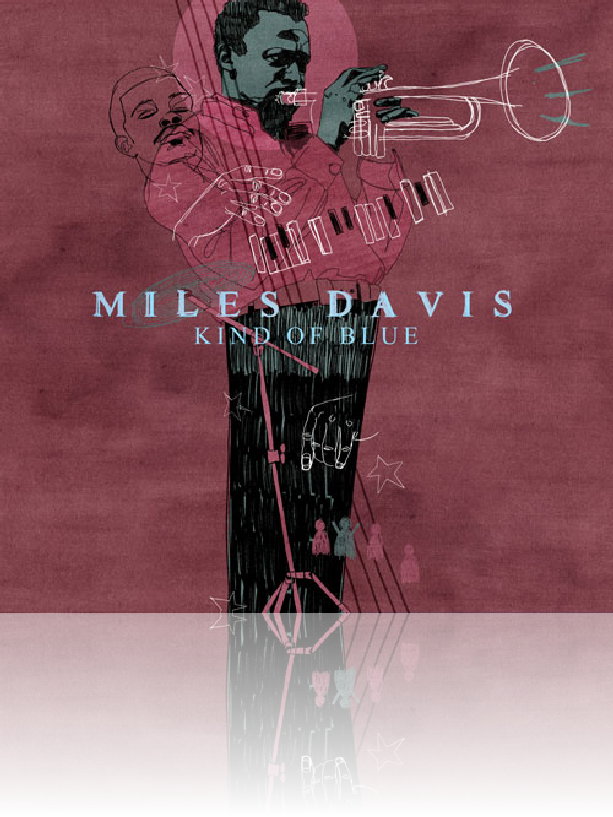
'Kind of Blue' is a high point into his carrer delving into the world of jazz.

He also had a drug and later alcohol addiction problem - changed his lifestyle and changed the course of jazz music. 

He is credited for making the International Jazz Festival famour after  having a feud with fellow trumpeter Wynton Marsalis, who publicly criticized Davis's work in jazz fusion. In 1986, Marsalis attempted to join Davis onstage without invitation and was strongly requested to leave the stage. 

Feature on the cover of the Rolling Stones magazine for the fusion of jazz and rock inspired by the likes of Jimi Hendrix in the 60's.

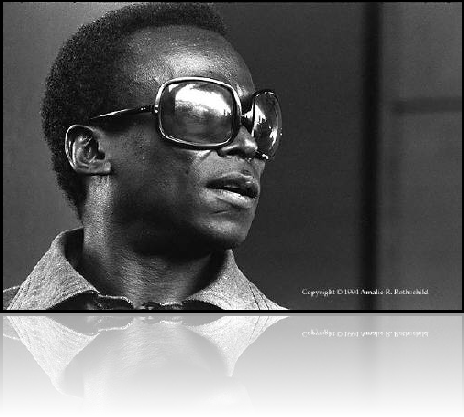
The birth of Cool Jazz - wearing his cool shades, he would go up on stage and play 3 notes for his solo and walk off.

Later he reinvented himself again using technology - synthesizers, drum loops and samples.

- Winner of Nine Grammy Awards.

He died in 1991 due to pneumonia and respiratory failure.

His nickname - The Prince of Darkness

One suggestion for Miles Davis's dark mood has been that he struggled with the combination of having a rise to fame and success coinciding with a time of racial inequality in America. It was during the 1940's, 50's and 60's, and despite being a major celebrity and world famous musician, he was at the receiving end of countless racial insults and mistreatment, including being beaten by police during a confrontation in the late 1950's. Neverless, Miles Davis was a complicated man, and there's no simple way to explain his life.
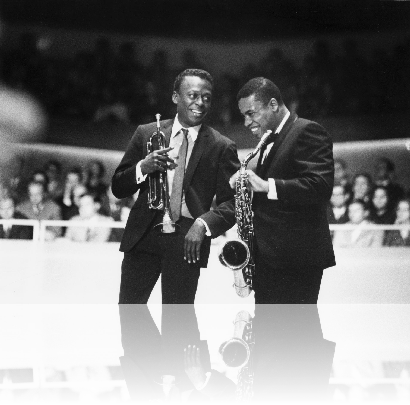
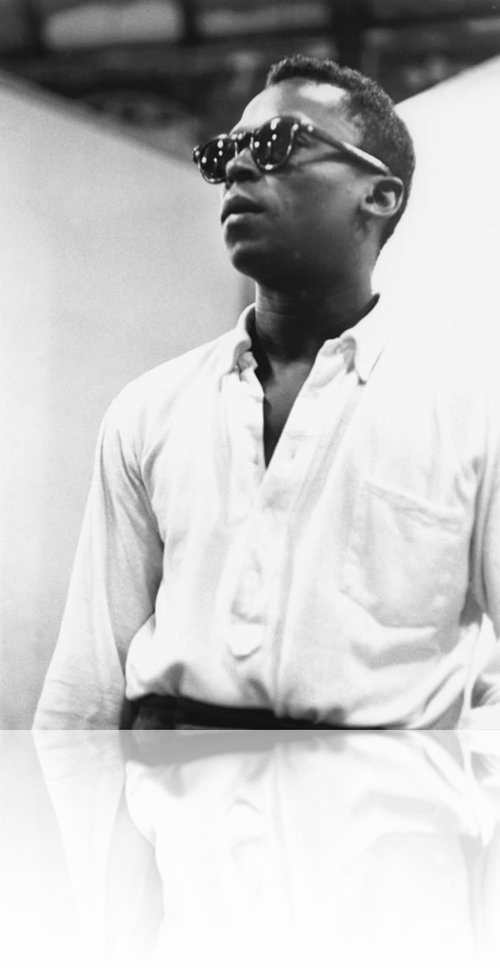
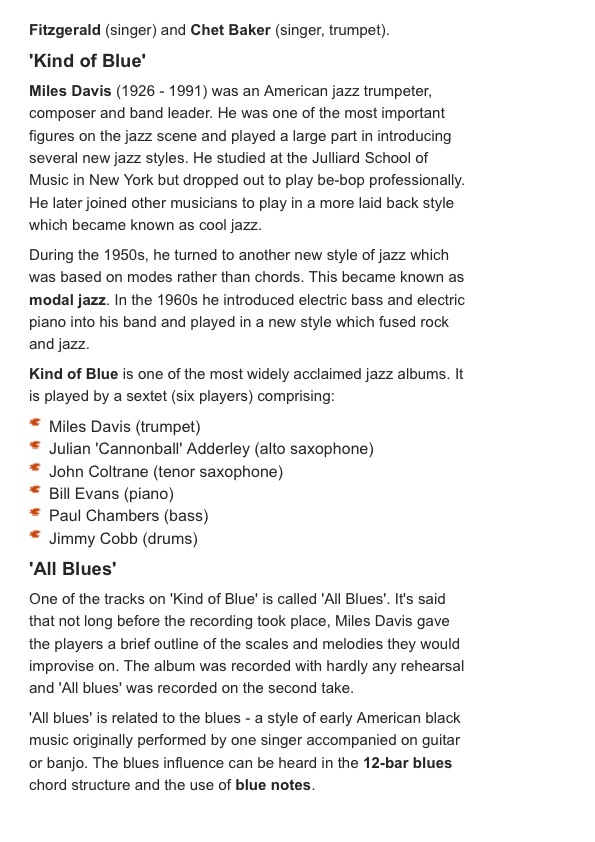
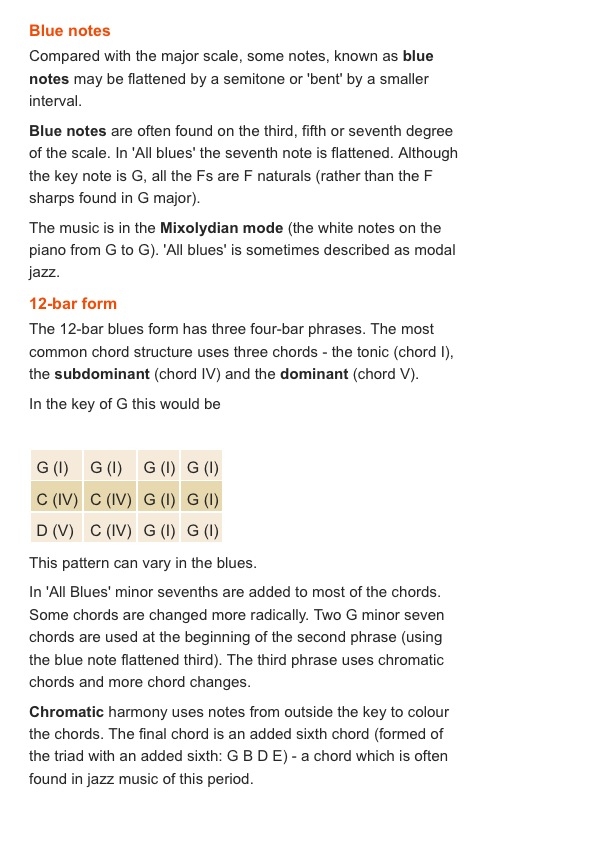
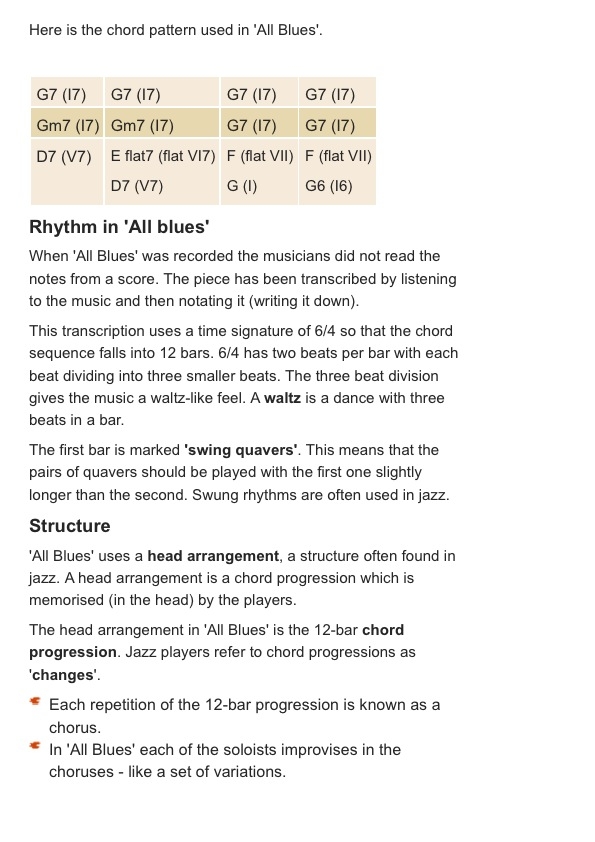
'All blues' is related to the blues - a style of early American black music originally performed by one singer accompanied on guitar or banjo. The blues influence can be heard in the 12-bar blues chord structure and the use of blue notes.

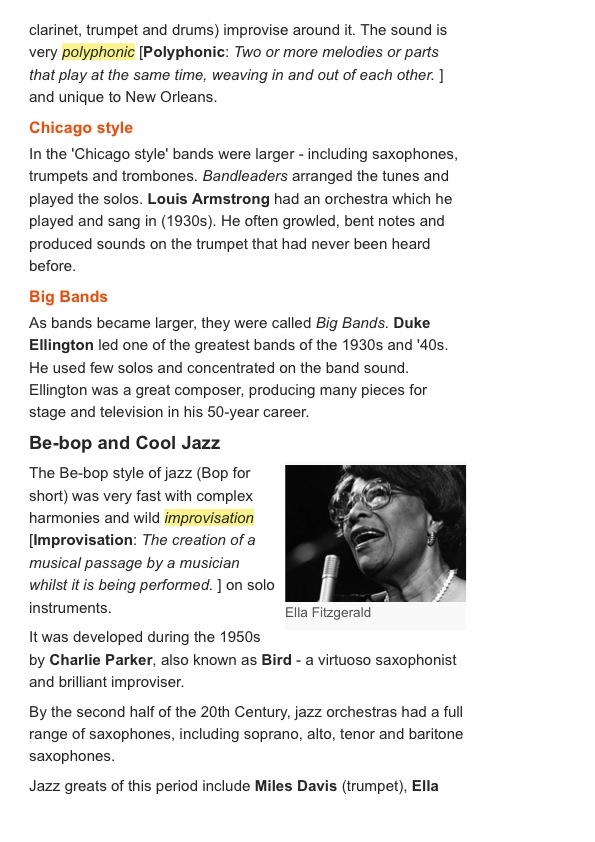
Released in 1959, All Blues is an example of modal jazz, which is more laid-back and uncomplicated with improvisations based on modes.

It's said that not long before the recording took place, Miles Davis gave the players a brief outline of the structure, scales and melodies they would improvise on, they didn;t perform with a score, just learn by listening and teaching each other. The album was recorded with hardly any rehearsals and 'All blues' was recorded on the second take.


The music is in the Mixolydian mode (the white notes on the piano from G to G). 'All blues' is sometimes described as modal jazz.


Click Here for written version: Biography: Miles Davis.

Miles Davis Sextet: Group of six performers
Miles Davis Story 2001 -
The Definitive Film Biography of a Jazz Legend.
Source: Dibb, M. (2001, April 14). The Miles Davis Story 2001. YouTube. Retrieved April 14, 2014, from http://www.youtube.com/watch?v=RD6CsSvLyjM#t=28
Watch on Youtube
Jazz History and Miles' All Blues
The Life History of Miles Davis!
[HOME]
[HISTORY]
[ANALYSIS]
[IMPROVISATION]
[EXAMPLES]
[CONTACT]
Question 1:
Question 2:
Question 3:
Question 4:
What style of jazz is All Blues classified as?
How many musicians are there in the band and what is the band called?
What is Miles' Nickname?
In what year was All Blues recorded?
Email:
5 Essential Questions!
Name:
What is the name of the album that contains All Blues?
Question 5:

[HOME]
[HISTORY]
[ANALYSIS]
[IMPROVISATION]
[EXAMPLES]
[CONTACT]